- search close
- menu close menu close
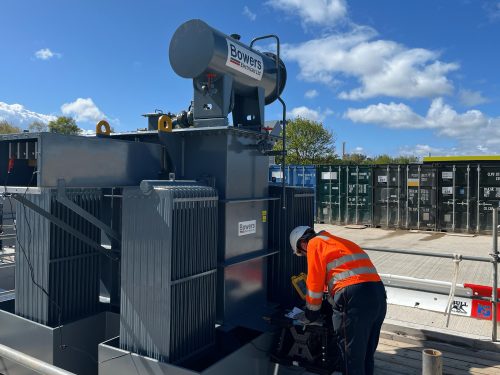
Power and distribution transformers serve as vital components within all electrical infrastructure, allowing the efficient distribution of power across the town, city, region, country, and the world. Maintaining the performance and reliability of these units is critical in ensuring sites such as hospitals, airports, manufacturing facilities and all other premises are powered and performing. When the colder months come around, these can introduce additional challenges that affect transformer reliability, and transformer winter maintenance becomes essential. Lower temperatures, increased humidity, condensation, seasonal load changes and exposure to harsh weather conditions can all increase the risk of transformer faults if equipment is not maintained properly.
Effective maintenance leading up to and during these colder months helps identify potential issues or faults before they occur and cause costly breakdowns and failures.
When transformers fail, it is often more than just unexpected maintenance that is the cost. Unplanned downtime brings work or production to a standstill, disrupting critical operations and leading to significant financial losses. Emergency replacement, specialist engineers, transport and installation can all add to the cost, while extended downtime can have an even greater impact on the wider business.
Effective pre-emptive transformer winter maintenance helps identify potential issues before they develop into these costly failures.
Through planned inspections, transformer testing, oil sampling and preventative maintenance, organisations can improve reliability, reduce downtime and extend transformer lifespan.
Preparing transformers before winter is not simply a seasonal task. It forms part of a wider asset management strategy designed to protect critical electrical infrastructure throughout the year.

Liquid-filled transformers rely on their insulating fluid to provide electrical insulation and transfer heat away from the windings and core. As temperatures fall, the viscosity of these fluids increases, which can affect how efficiently heat is circulated through the transformer.
Transformer Oil (ONAN):
Conventional mineral transformer oil becomes more viscous at lower temperatures. This can reduce the rate of natural oil circulation and, in turn, affect heat transfer. During periods of high winter demand, reduced cooling efficiency can contribute to increased operating temperatures and place additional thermal stress on the transformer.
Synthetic Ester Fluid (KNAN):
Synthetic ester fluids such as MIDEL also become more viscous as temperatures fall but can offer advantages in low-temperature operation depending on the specific fluid formulation. Synthetic ester fluids provide strong heat-transfer performance alongside excellent moisture tolerance, helping maintain the transformer’s insulation system in challenging conditions. Their high moisture tolerance is particularly beneficial during winter, when condensation and humidity can increase the risk of moisture entering the transformer.
For transformers operating in demanding environments, synthetic ester fluids can therefore provide additional resilience against some of the challenges associated with cold and damp conditions, supporting reliable operation throughout the colder/ winter months.
Moisture is one of the biggest risks to transformer reliability, and autumn and winter conditions (especially in the UK) often bring conditions such as increased humidity, heavy rainfall, temperature fluctuations and freeze-thaw cycles.
Moisture can enter transformers through any of the following:
Water contamination can reduce transformer oil dielectric strength and accelerate insulation ageing. Over time, this can contribute to winding deterioration, partial discharge activity and increased transformer failure risk.
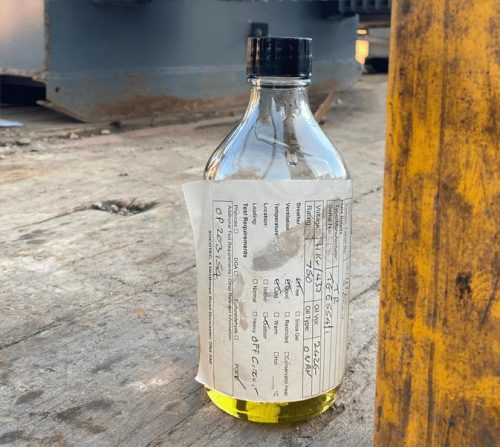
Checking silica gel breathers, conservator systems and carrying out oil analysis are important parts of winter transformer maintenance.
Many organisations experience increased electrical demand during winter due to heating systems, lighting requirements and operational changes. Higher loading increases transformer temperature rise and places additional thermal stress on the transformer’s insulation systems. Monitoring transformer loading, temperature trends and hot spots through condition monitoring helps identify whether equipment is operating within safe limits.

Transformers are designed to operate reliably in demanding environments. However, colder weather, moisture and fluctuating temperatures can all place additional stress on key components of the transformer. As a result, winter conditions can increase the likelihood or severity of certain issues, particularly for transformers installed outdoors that are exposed to the elements. Regular transformer maintenance helps identify issues before they become major issues such as:
Many transformer failures develop gradually rather than occurring suddenly. Regular inspections and condition monitoring allow engineers to detect early warning signs and address problems before they result in unexpected outages.
For businesses where electrical supply is critical, preventative transformer maintenance supports:
A good transformer maintenance plan should always be tailored to the equipment, operating conditions, usage and criticality of the site, and this determines the frequency of visits, checks, testing and maintenance. Rather than waiting for a transformer to develop a fault, a planned maintenance programme allows potential issues to be identified and addressed before they result in costly or disruptive failures.
Transformers should have a ‘Standard Maintenance’ at least every 12 months, and in certain cases can be recommended to be every 6 months. This more regular interval suggestion could be for any of the following reasons:
This ‘Standard Testing’ routine should last 3 to 4 years, and then the transformer should have what is called ‘Intrusive Maintenance ’; this consists of more extensive testing and a transformer shutdown for this testing.
Depending on these factors, a transformer service plan can look very different:
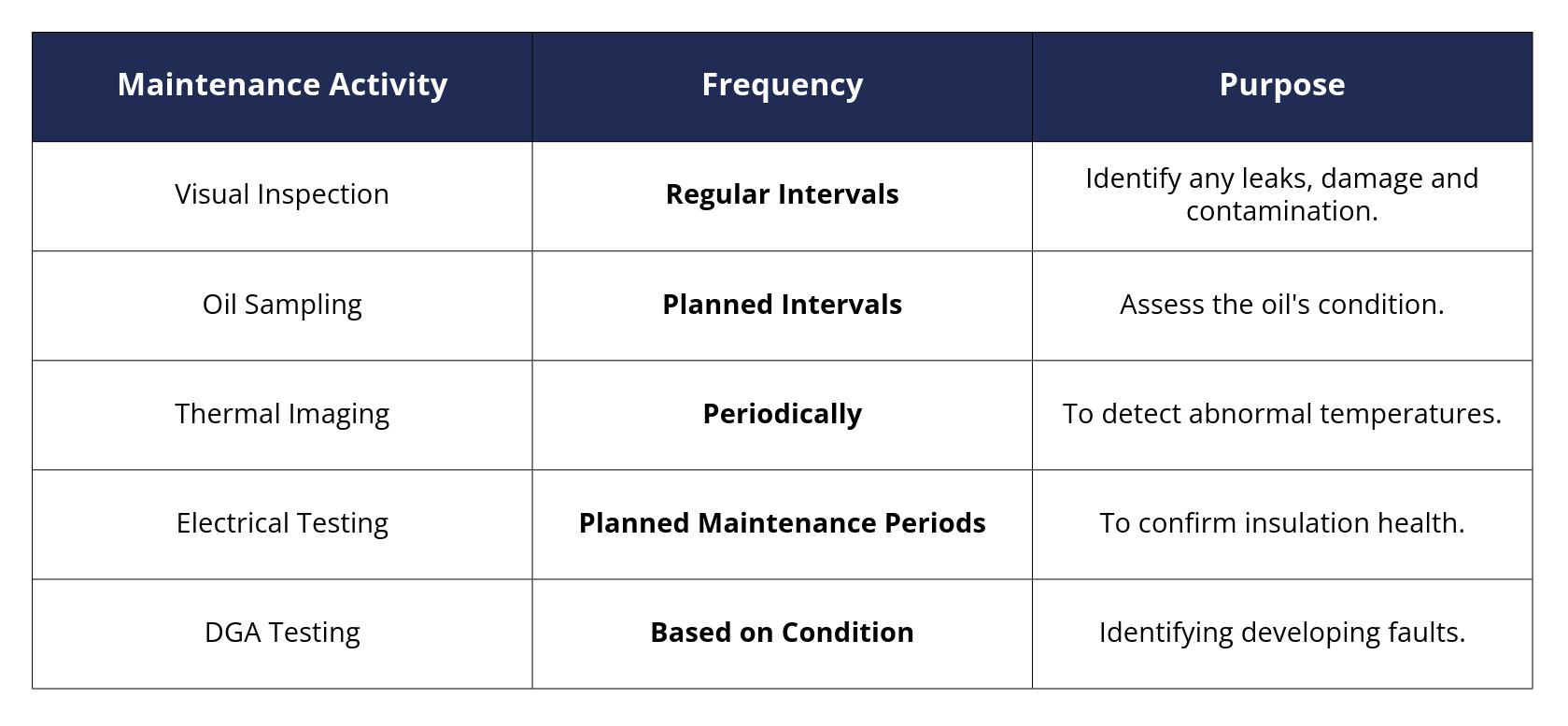
A typical preventative maintenance programme may include:
One of the biggest problems during the colder winter months is transformer shutdowns. When an outdoor transformer is shut down for intrusive maintenance or an extended shutdown period, it can cool significantly, increasing the risk of condensation forming within the transformer and associated equipment.
This is less likely to occur while the transformer is in operation, as the heat generated during normal operation helps keep the equipment warm and reduces the potential for condensation to form.
When re-energising a transformer after a shutdown period, particular care should be taken to inspect for signs of moisture or condensation. The transformer itself, along with the HV and LV boxes, should be carefully checked to ensure that no moisture ingress has occurred before the transformer is re-energised.
Bowers Electricals supports organisations across the UK with transformer maintenance, testing and reliability services.
Our experienced engineers can assist with:
A planned maintenance programme helps identify risks early and ensures transformers remain reliable when they are needed most. These regular visits, especially for older units that are coming to the end of their life, can help identify when a replacement transformer will be needed as part of a planned asset replacement and prevent a costly breakdown or failure.
A planned replacement allows equipment, installation, transport and engineering work to be scheduled in advance, helping to avoid the premium costs associated with emergency callouts, expedited manufacturing or sourcing, specialist transport and urgent installation. More importantly, it can minimise costly operational downtime and disruption to the wider site.
By identifying ageing or deteriorating transformers before they fail, businesses can budget for replacement, choose the most suitable equipment and schedule the work around their operations, rather than being forced into an expensive emergency replacement when the transformer is already out of service.
To discuss your transformer maintenance requirements or a scheduled transformer replacement, contact Bowers Electricals to arrange an inspection or maintenance review.
enquires@bowerselec.co.uk
01773 531531
How does cold weather affect transformers?
Cold weather can increase transformer oil viscosity, reduce cooling efficiency and increase the risk of moisture-related insulation problems. Regular inspections and oil testing help maintain reliability during winter.
What maintenance should be completed before winter?
Before winter, transformers should undergo visual inspection, oil testing, breather checks, cooling system inspections, thermal imaging and electrical testing where required.
How does moisture affect transformer oil?
Moisture reduces transformer oil dielectric strength and can accelerate insulation ageing, increasing the risk of electrical faults and transformer failure.
How often should transformers be inspected?
Inspection frequency depends on transformer type, age, environment and operational importance. Critical assets may require more frequent condition monitoring and testing.
Why do transformers fail in winter?
Winter transformer failures are commonly linked to moisture ingress, oil deterioration, cooling issues, increased loading, damaged seals and ageing insulation systems.